For couples planning a dry-hire wedding at Braxted Park Estate, what difference does having a dedicated coordinator make to the day?
On a dry hire day the venue gives you an extraordinary building and the freedom to do what you like with it. Everything else arrives on the back of a van. Someone has to receive it, place it, brief the person who brought it, keep it running to time, and then reverse the entire thing at the end of the night.
Without a coordinator, that someone is you, or it’s your mother, or it’s the friend who’s good in a crisis. On a dry hire estate that isn’t a small favour, it’s a full day’s work during the only day of your life you can’t get back.
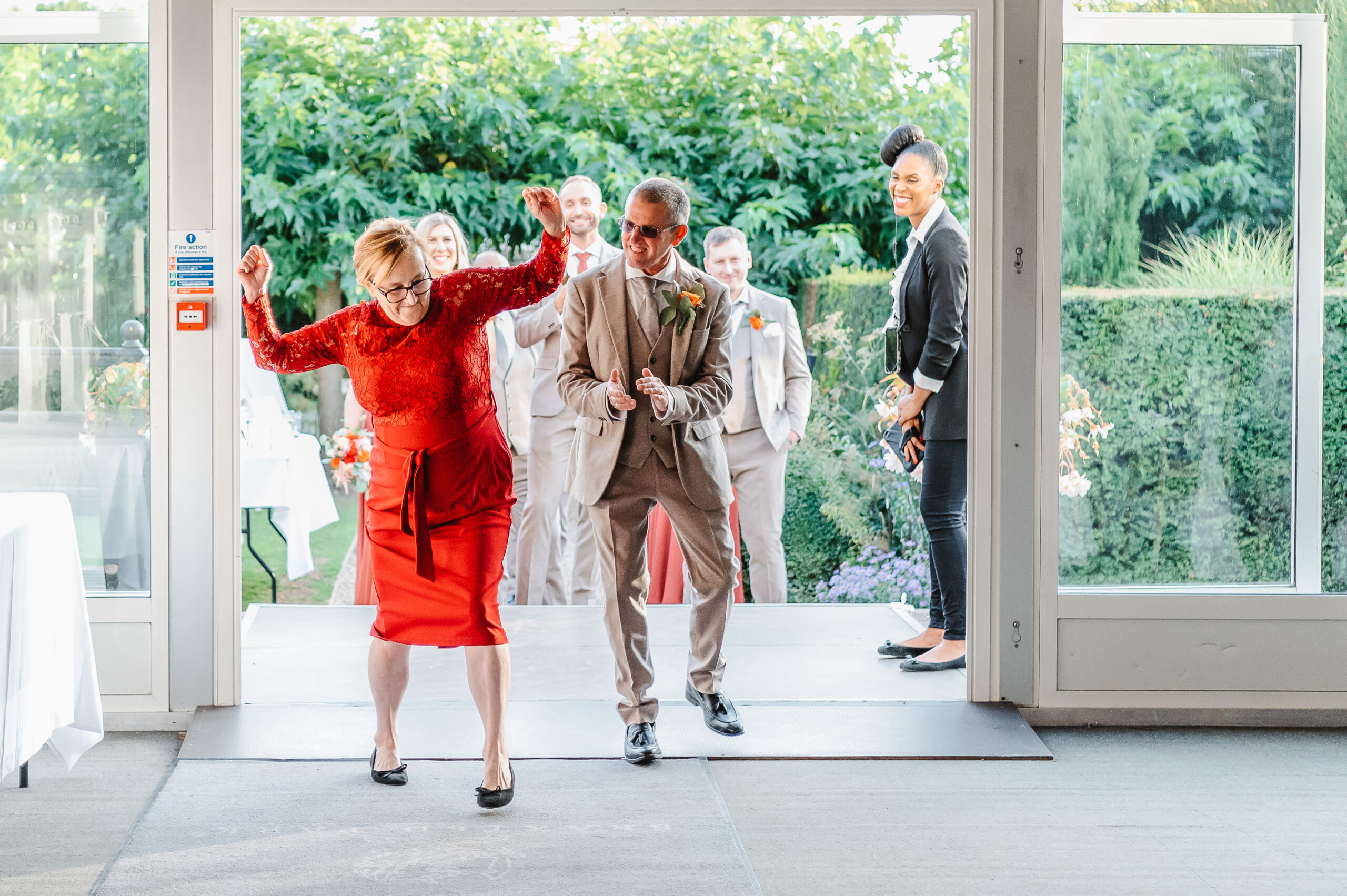
One of our past brides, Emily, put it plainly. Before booking us, she and Suk were starting to feel fearful that they wouldn’t be able to actually be in the moment, that they would end up directing the operations themselves. Bringing us in meant they and their families could be guests of honour at their own wedding instead.
How far in advance should our couples be thinking about booking a coordinator, and what’s the ideal timeline for working together?
Four weeks is our absolute minimum, and we hold that line, because under four weeks we can’t do the work to the standard we would want to put our name to.
The real window is six to nine months. Our calendar fills much further out than the minimum suggests, and 2027 season dates are already going. Booking at six to nine months means we’re planning alongside a couple rather than catching up to a date.
What those months look like in practice: we book the date, then we’re a sounding board while the couple design their day. The intensive work starts roughly eight to six weeks out. A handover form, a handover call, a first timeline draft, then a second one once every detail is confirmed. From there we take over supplier communications and every supplier receives the running order before the day, so nobody arrives at Braxted Park guessing.